The ASA Evidence Standard
Grading evidence, deception, and endgame confidence in intelligence work.
The two-axis Admiralty code lets a well-built denial and a corroborated attribution sit at the same grade, and it carries no check for deception, self-interest, sourcing type, or synthetic media. The ASA Evidence Standard keeps the two axes as the entry anchor and grades the item across 30 factors in 9 clusters to return three separate numbers: evidence quality, deception likelihood, and endgame confidence. Each score carries a band, and each band carries an action. For the scoring it governs, read How does Treadstone 71 score adversaries and grade evidence?

Evidence qualityMean of the quality clusters, capped by the higher risk score. Caps the likelihood a product prints.
Deception likelihoodProbability an adversary shaped the evidence. Holds the decision when it climbs.
Endgame confidenceConfidence in the Most-Likely Achieved Endgame. Decides whether an endgame gets named.
Cite the standard
The DOI resolves to the archival record. The site URL resolves to this page.
Treadstone 71 LLC. The ASA Evidence Standard, Public Edition 1.2. Half Moon Bay, CA: Treadstone 71 LLC, October 4, 2026. https://www.treadstone71.com/asa-evidence-standard. DOI: https://doi.org/10.5281/zenodo.23137881.
BibTeX
@techreport{treadstone71_asa_2026,
  title     = {The ASA Evidence Standard: Grading evidence, deception, and endgame confidence in intelligence work},
  author    = {{Treadstone 71 LLC} and Bardin, Jeffrey S.},
  institution = {Treadstone 71 LLC},
  address   = {Half Moon Bay, CA},
  year      = {2026},
  month     = oct,
  day       = {4},
  note      = {Public Edition 1.2. doi:10.5281/zenodo.23137881},
  url       = {https://www.treadstone71.com/asa-evidence-standard},
  doi       = {10.5281/zenodo.23137881}
}
From item to product sentence
Any artifact, report, or claim enters on the anchor, runs through the clusters, returns three scores, takes the action its bands require, and leaves one ledger row and one product sentence.
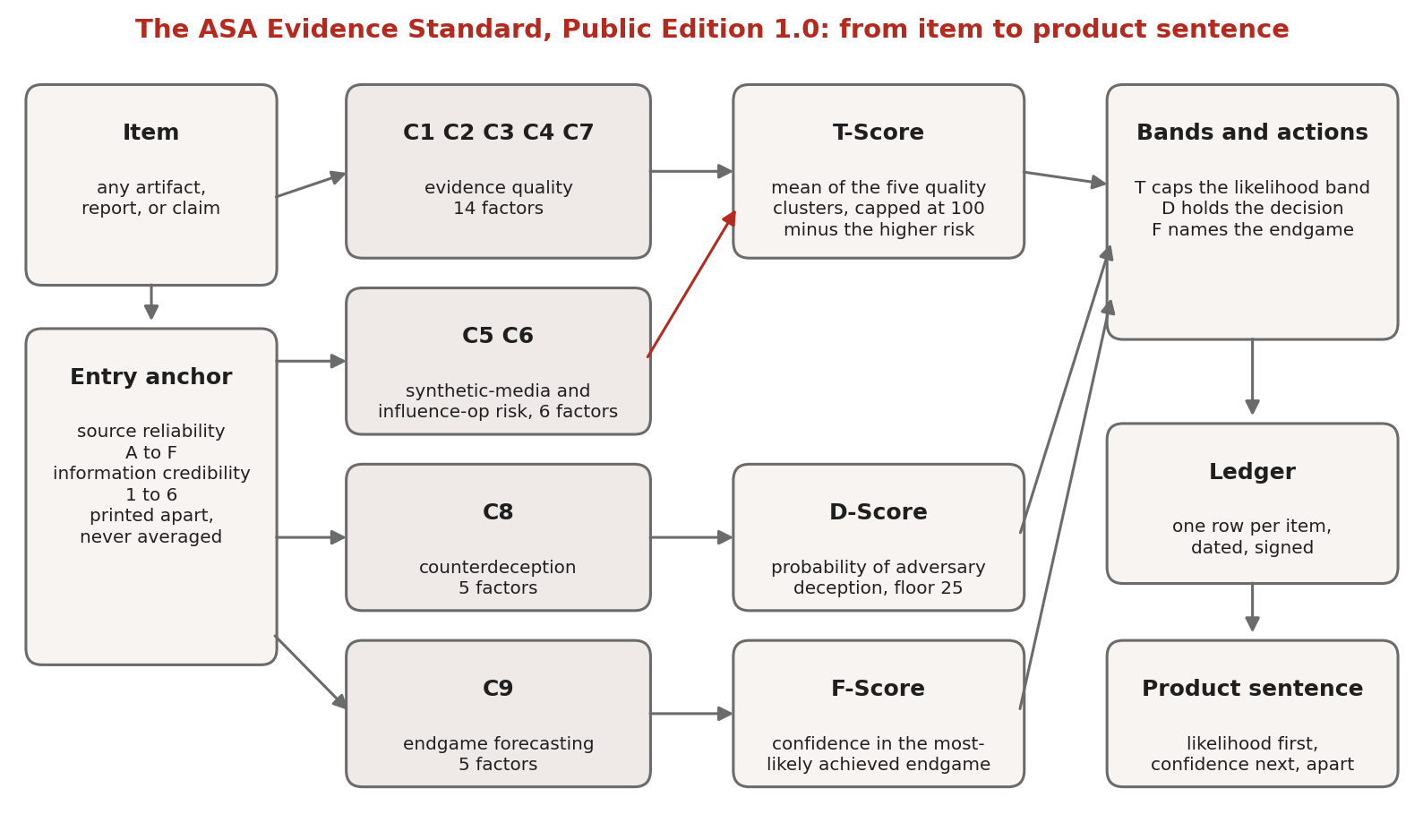
Figure 1. From item to product sentence.
Three readers, three changes
Deception is priced in before money moves
Under the two-axis code, adversary-built evidence enters the decision at full credit. ASA flags shaped evidence on its own axis with the D-Score, and the F-Score names the endgame to plan against instead of the endgame the adversary announced. The 2002 mobile-weapons retrospective in Section 6.1 shows the judgment the standard permits: Unlikely, with a decision hold.
A gut read becomes a fixed scoring path
Minutes cover a routine item and an hour covers an item that drives a decision. What comes out is a number a second reader reproduces from the same ledger.
A one-page ledger survives the post-mortem
The ledger runs from the headline judgment back to a named source, a grade on each axis, the deception markers observed, and the analyst's own bias disclosure. A finding survives because the chain is on paper.
Two grades, printed apart, never averaged
The classic Admiralty scales stay in place beneath the new factors, with the NATO STANAG 2511 definitions. Every item enters with both. A strong source carrying doubtful content stays recorded as strong source, doubtful content.
Table 1 · Source reliability
| Grade | Term | Definition |
|---|---|---|
| A | Completely reliable | A tried and trusted source which can be depended upon with confidence. |
| B | Usually reliable | A source successful in the past for which some element of doubt remains in a particular case. |
| C | Fairly reliable | A source occasionally used in the past upon which some degree of confidence can be based. |
| D | Not usually reliable | A source used in the past that has proved more often than not unreliable. |
| E | Unreliable | A source used in the past that has proved unworthy of any confidence. |
| F | Reliability cannot be judged | A source not used in the past. |
Table 2 · Information credibility
| Grade | Term | Definition |
|---|---|---|
| 1 | Confirmed by other sources | Stated with certainty to originate from a source other than the existing information on the subject. |
| 2 | Probably true | Independence cannot be guaranteed, but prior reporting establishes its likelihood. |
| 3 | Possibly true | Insufficient confirmation, but the item does not conflict with the target's reported behavior. |
| 4 | Doubtful | The item tends to conflict with the target's reported or established behavior. |
| 5 | Improbable | The item positively contradicts prior reporting or the target's established behavior. |
| 6 | Truth cannot be judged | No basis for comparison with any known behavior pattern of the target. |
Nine clusters, thirty factors
Five quality clusters feed the T-Score. Two risk clusters pull it down and never add. One cluster produces the D-Score, one the F-Score. The full rubric with per-factor thresholds is in the paper.
| Cluster | Feeds | Factors |
|---|---|---|
| C1 Source Credibility | T | F1 Source Reliability (Admiralty A to F) · F2 Source Authority · F3 Source Independence · F4 Source Access and Proximity |
| C2 Information Validity | T | F5 Corroboration · F6 Internal and External Consistency · F7 Specificity and Granularity · F8 Information Credibility (Admiralty 1 to 6) |
| C3 Relevance | T | F9 Topical Relevance · F10 Temporal Currency |
| C4 Cyber and Technical Integrity | T | F11 Chain of Custody and Provenance · F12 Technical Verifiability · F13 Metadata Integrity |
| C5 AI and Synthetic Media Risk | T cap | F14 AI-Generation Probability · F15 Provenance Standard Absence · F16 Manipulation Forensics |
| C6 Cognitive and Influence-Op Risk | T cap | F17 Coordinated Inauthentic Behavior Indicators · F18 Propaganda Technique and BEND Markers |
| C7 Analytic Tradecraft Fit | T | F19 Bias Disclosure · F20 Confidence Calibration and Reproducibility |
| C8 Counterdeception | D | F21 Deception Indicator Density · F22 Cross-INT Discrepancy · F23 Signature Anomaly Index · F24 Cover Story Plausibility · F25 Action-Narrative Coherence Gap |
| C9 Endgame Forecasting | F | F26 Target Set Convergence · F27 Capability-Intent Alignment · F28 Timeline Compression · F29 Cross-Domain Coordination · F30 Endgame Path Probability |
The T-Score in one line. The mean of the applicable quality clusters, C1, C2, C3, C4, and C7, capped at 100 minus the higher of the two risk scores. Clusters that do not apply to an item are left out of the mean. No artifact earns a bonus for being clean; a synthetic or coordinated artifact pays a penalty in proportion to the risk.
Each score carries a band. Each band carries an action.
Table 5 of the paper. The T band caps what the product may print, the D band can hold the decision, the F band decides whether an endgame gets named.
| Score | Band | Action the band requires |
|---|---|---|
| T 80 to 100 | Strong | Any likelihood band on the spectrum is available to the product |
| T 60 to <80 | Adequate | Likelihood capped at Likely; nothing prints above 85 percent |
| T 40 to <60 | Weak | Likelihood capped at Roughly even chance; the product states the evidence gap |
| T 0 to <40 | Insufficient | No forward judgment from the item; the product reports the gap and tasks collection |
| D 95 to 100 | Deception Almost certain | The decision that rests on the item holds; counter-deception collection is tasked; the product carries a deception warning line; a second reader signs; the likelihood cap drops one band |
| D 85 to <95 | Deception Highly likely | Same as above |
| D 55 to <85 | Deception Likely | Deception warning printed; second reader mandatory; the likelihood cap drops one band |
| D 45 to <55 | Deception Roughly even | Note printed in the product and the ledger |
| D under 45 | Deception Unlikely | Ledger note only |
| F 85 to 100 | Endgame named, Highly likely or above | Plan against the Most-Likely Achieved Endgame |
| F 55 to <85 | Endgame named, Likely | Name it; print the two alternatives with their probabilities |
| F 45 to <55 | Endgame open | Present three hypotheses; name none |
| F 0 to <45 | Endgame not assessed | The product says so |
Probability language. Seven terms on a Kent-style spectrum with half-open intervals: almost certain 95 to 99, highly likely 85 to <95, likely 55 to <85, roughly even chance 45 to <55, unlikely 15 to <45, highly unlikely 5 to <15, almost no chance 1 to <5. Section 11 of the paper maps them to ICD 203.
Nine rules, every item
- Self-serving claims cap at fairly reliable.A source speaking in its own cause grades no higher than C on Table 1. A ministry denying its own operation never reaches A or B.
- Admissions against interest are exempt from the cap.A source conceding a fact that damages its own position grades on the ordinary scales, and the ledger records the condition. The cap exists for the denial, not the confession.
- Verified fact and adversary claim never share a sentence.What independent evidence confirms and what the adversary asserts each get their own sentence and their own grade.
- Every judgment carries a band or a ranking.Attribution, motive, effect, and future implication each carry a probability band or a source ranking. An assessment without a confidence marker is a draft, not a product.
- The denial-and-deception check runs at Level 2 and above.Factor 21 scores marker density against the deception catalog in Section 5.
- Technical and human sourcing grade on their own terms.A verifiable artifact and a relayed rumor do not land on the same grade by default.
- Single-source items carry a corroboration penalty.One uncorroborated source cannot reach the top band on C2, and the product states the single-source condition.
- Conflicts between axes are recorded, not reconciled.Strong source, doubtful content stays exactly that. The method never splits the difference into one blended number.
- Grades are re-opened, not overwritten.Re-graded when new information touches a factor, when a supported forecast resolves, at each Index release, and on request. The ledger keeps every prior grade with its date.
Nobody scores thirty factors on every item
Three levels of effort, routed by what the item has to carry.
Level 1 · The anchor
Routine items receive the two Admiralty grades from Tables 1 and 2 and enter the ledger. Minutes.
Level 2 · Three clusters
Items that bear on a judgment receive C1, C2, and C8 in addition to the anchor. Under thirty minutes.
Level 3 · The full thirty
Items that drive a decision, and every item in the Adversary Index catalog, receive all nine clusters and the full tri-score. About an hour per item.
The five-point rule. Any score within five points of a band boundary in Table 5 goes to a second reader before publication.
Four items, graded in the open
Section 6 of the paper grades four real cases end to end, cluster by cluster, and prints the product sentence each one permits. The sentences below are the paper's.
The source behind the 2002 mobile-weapons estimate
A single liaison-relayed source with untested access, one recanting corroborator, and no reproducible path to the raw reporting. T 48, Weak. D 72, deception Likely.
A multi-agency attribution assessment
Volt Typhoon: reproducible artifacts, a joint advisory, corroboration across disciplines. T 83, Strong. D 30, Deception Unlikely, with a false-flag allowance. F 60, Likely.
A state denial with coordinated amplification
The claim that the actor is a criminal ransomware group and that foreign-language strings were planted. Rule 1 caps the source at C. T 30, Insufficient. D 78, deception Likely.
A spoofed article and the affidavit that attributed it
Two ledger rows, kept apart under Rule 3. The article: F6 on first encounter, E5 after attribution, T 10. The affidavit: B1, T 88. Rule 9 at work.
Five steps for an intelligence unit
Set the entry anchor
Grade each source A through F and each report 1 through 6 on Tables 1 and 2, held apart.
Choose the level
Routine items to Level 1, judgment-bearing items to Level 2, decision-driving items to Level 3.
Apply the rules
Cap self-serving claims, exempt admissions against interest, split fact from claim, band every judgment, run the deception check.
Read the bands
Take the action Table 5 requires before a sentence prints.
Publish with the ledger
Attach the one-page ledger. Any case five points or less from a band edge goes to a second reader.
Under every score, and beyond them
The Adversary Index
Every one of the 42 scored adversaries carries its evidence under this standard. The Tier 0 edition is free.
Open the IndexCognitive Warfare Monitor
Every source in every tracked narrative carries an anchor grade; every judgment a Kent-style band. Inaugural brief October 19, 2026.
See the MonitorASA Measurement of Effect
The same discipline applied to the question a funder asks: did the campaign work? Self-measured effect claims cap at C on reliability. Draft for comment, published November 2, 2026.
Read the protocol page
The ledger template and the internal edition
The one-page ledger is available as a fillable template. The internal edition, with refined cluster weights, per-factor thresholds, severity weights, and the calibration record, is available to TAI Tier 3 subscribers and to training clients under mutual non-disclosure agreement.
Open to cite. Open to adopt.
Public Edition 1.2 is published under the Creative Commons Attribution-NonCommercial-NoDerivatives 4.0 International license (CC BY-NC-ND 4.0). The license does not permit commercial reuse or derivative works. Each needs written permission from the firm.
The firm grants one set of permissions without fee: citation, quotation with attribution, and adoption for internal analytic use by any intelligence unit, agency, or enterprise. Adoption for internal use includes reproduction of Tables 1 through 7, 11, and 12 in internal ledgers and training material with the citation line intact.
Reproduction of the standard in a commercial product, resale, incorporation into a paid service, translation or adaptation, and any instrument or software that implements the scoring rules all require a written license from Treadstone 71, LLC. Ingestion of the standard into AI training corpora, embedding indexes, or retrieval pipelines requires a written license. The firm reserves text and data mining rights under EU Directive 2019/790, Article 4.
The ASA Evidence Standard, STEMPLES Plus, The Adversary Index, TAI, and Advanced Analytic Dominance are trademarks of Treadstone 71, LLC. License inquiries:
Before you adopt it
What is the ASA Evidence Standard?
A published method for grading intelligence evidence. It keeps the classic Admiralty scales as the entry anchor, source reliability A through F and information credibility 1 through 6, printed apart and never averaged, then grades the item across 30 factors in 9 clusters to produce three scores: the T-Score for evidence quality, the D-Score for deception likelihood, and the F-Score for endgame confidence. ASA stands for Adversary Scoring Architecture, the engine beneath The Adversary Index.
What does the two-axis Admiralty code get wrong?
It lets a well-built denial and a corroborated attribution sit at the same grade, and it carries no check for deception, self-interest, sourcing type, or synthetic media. The standard keeps the two axes as the anchor and adds the checks on their own axes, so good-looking evidence an adversary built can be recorded as exactly that: high T beside high D.
How much work does grading take?
Three levels. Level 1 is the anchor only, the two Admiralty grades, minutes. Level 2 adds three clusters, source credibility, information validity, and counterdeception, for items that bear on a judgment, under thirty minutes. Level 3 is the full thirty factors and the full tri-score, for items that drive a decision and for every item in The Adversary Index, about an hour. Any score within five points of a band boundary goes to a second reader before publication.
Is the standard validated?
Not yet, and the paper says so. The standard graded the evidence base for every actor in The Adversary Index ahead of the July 15, 2026 release and runs again for the Q1 2027 release. Inter-rater reliability, calibration against resolved forecasts, and error rates have not been published. Until they are, the tri-score is a structured expert rating with a documented method. The validation program, 40 graded items scored blind by three raters, publishes its results with the Q1 2027 Adversary Index release.
Can my unit adopt it, and what does it cost?
Public Edition 1.2 is published under CC BY-NC-ND 4.0. It is open to citation, quotation with attribution, and adoption for internal analytic use by any intelligence unit, agency, or enterprise without fee, including reproduction of Tables 1 through 7, 11, and 12 in internal ledgers and training material with the citation line intact. Commercial reuse, derivative works, resale, incorporation into a paid service, translation or adaptation, and ingestion into AI training corpora and retrieval pipelines require a written license from Treadstone 71, LLC.
How do I cite it, and where is the DOI?
Treadstone 71 LLC. The ASA Evidence Standard, Public Edition 1.2. Half Moon Bay, CA: Treadstone 71 LLC, October 4, 2026. https://www.treadstone71.com/asa-evidence-standard. DOI: https://doi.org/10.5281/zenodo.23137881. The Zenodo record holds the archival PDF and resolves for the life of the record.
Grade the next item on the anchor. Then the next thirty factors.
Download the paper, request the ledger template, or ask about the internal edition and the training that runs it.
Direct line: 424.234.3629
